How to outline a novel, chapter by chapter
An outline doesn’t have to be a cage. The most useful outlines are short enough to read in a minute and loose enough to change when the story surprises you. Here is a way to build one in layers.
Layer 1: one sentence
Write the whole story in one sentence: who wants what, what stands in the way, and what’s at stake.
Example: A lighthouse keeper’s daughter must keep the light burning through a winter of storms, or the ship carrying her brother home will be lost.
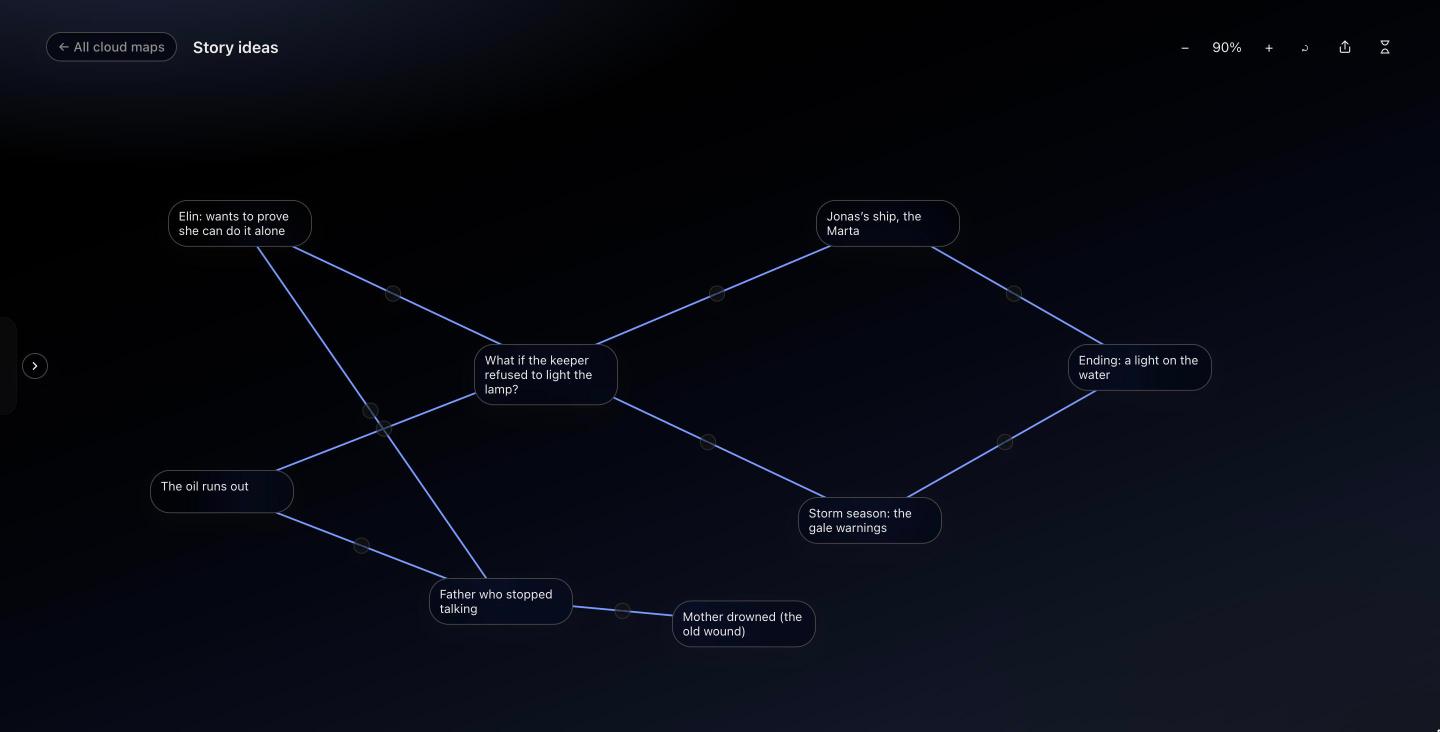
If you can’t write that sentence yet, that’s fine. Brainstorm first (a mind map helps) and come back to it.
Layer 2: the turning points
Most stories, whatever structure you follow, turn on a handful of moments. Write one or two lines for each:
- The start: the world before anything changes.
- The inciting incident: the event that sets the story moving.
- The first turn: the point of no return, where the character commits.
- The midpoint: a discovery or reversal that changes what the story is about.
- The crisis: the lowest point, where everything seems lost.
- The climax: the final confrontation or choice.
- The ending: the new normal, and what it cost.
Knowing the ending, even roughly, is the single most useful thing you can do. It tells you what every chapter is travelling towards.
Layer 3: one line per chapter
Now fill the gaps between turning points with chapters. For each chapter, write a single line answering three questions:
- Whose chapter is it? (point of view)
- What happens?
- What changes by the end? A chapter where nothing changes is usually a chapter to cut or merge.
| Chapter | Summary |
|---|---|
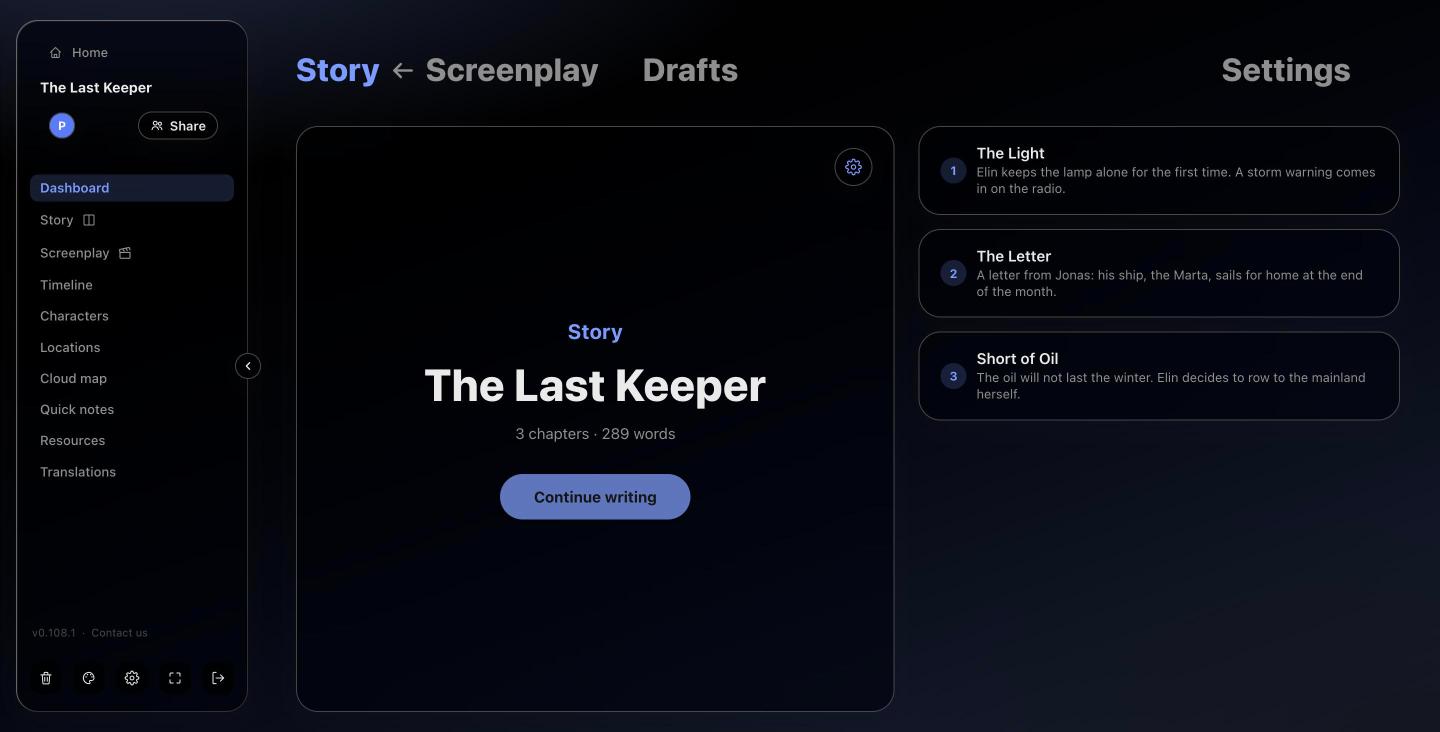
| 1 | Elin keeps the light alone for the first time; the storm warning arrives. |
| 2 | A letter: her brother’s ship sails at the end of the month. |
| 3 | The oil supply is short. Elin decides to row to the mainland. |
Keep the outline alive
Outlines go stale the moment you start writing, because writing teaches you things the outline didn’t know. Two habits help:
- Update the summary when you finish a chapter, so it describes what you actually wrote.
- Re-read the next three summaries before you start writing, not the whole outline. It keeps you pointed in the right direction without boxing you in.
Outlining in Storywriting
Each chapter in a story can carry a short summary. On the project’s Dashboard, the chapters are listed beside your story with their summaries, so the outline is always one glance away, and clicking a chapter takes you straight to it.
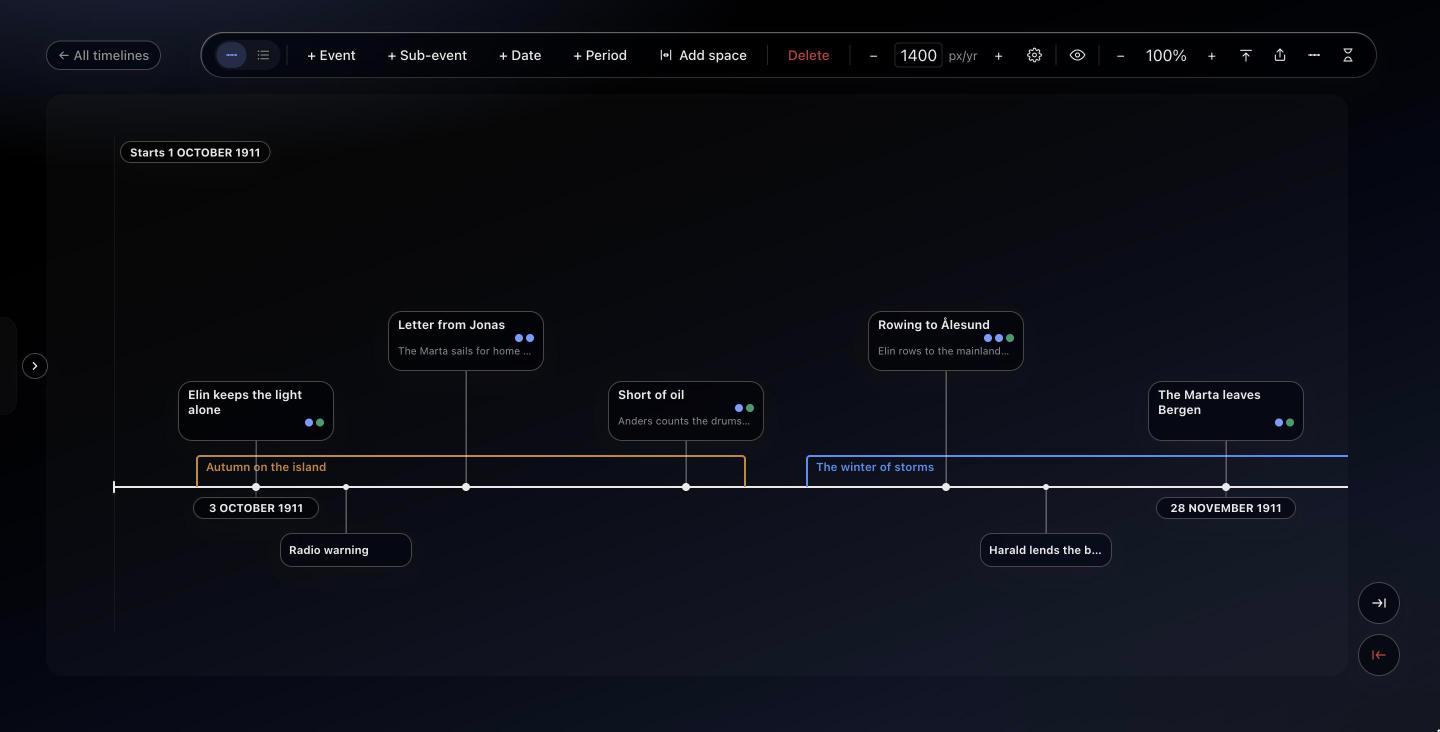
For the bigger picture, put the turning points on the timeline, and keep loose ideas in a cloud map until they find their chapter.