How to build a fictional world (starting with its places)
It’s easy to spend months inventing a world and never write the story. The trick is to build outward from what the story needs: the rooms, streets and coastlines your characters actually walk through.
Start with the places on the page
List every place your first chapters use. For each one, answer a few questions:
- What is it? A city, a ship, a kitchen, a forest.
- What does it feel like? The light, the sounds, the smell, the temperature.
- Why does it matter to the story? What happens here that couldn’t happen anywhere else?
- What’s its history? Only the parts that leave traces now: a burned wing, a statue nobody remembers.
A place with a purpose and two or three sharp details feels more real than one described in full.
Set a few firm rules
Every world has rules: how far a day’s travel goes, who holds power, what magic or technology can and can’t do, what things cost. Write them down early and keep them short. Readers forgive almost anything except a rule that bends when the plot needs it to.
Grow the world from conflict
The most interesting parts of a world are where things rub against each other: two cities competing for one river, a law nobody follows, a religion split in two. These tensions give you scenes, not just scenery.
Keep it consistent
- Keep one sheet per place and update it when the story changes something.
- Note distances and travel times; they matter more than maps.
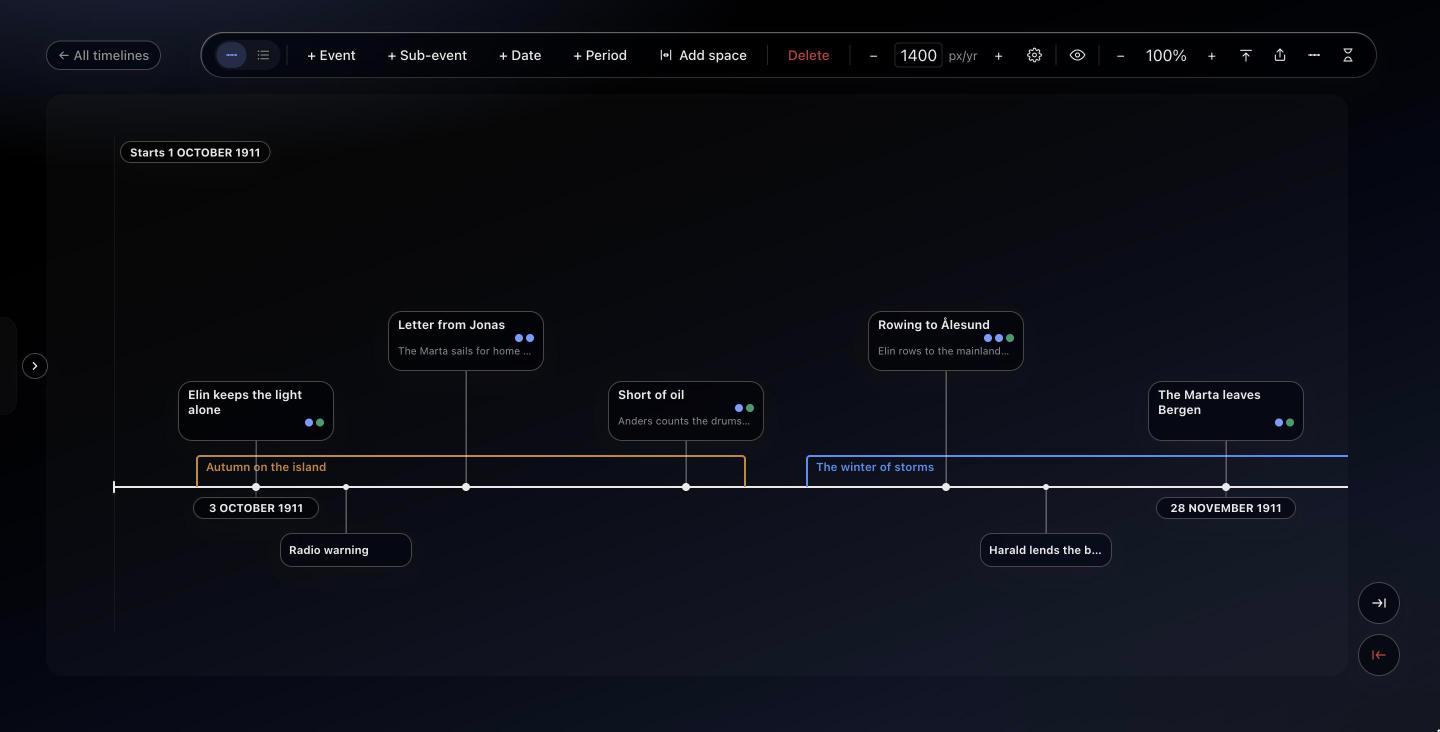
- Track history on a timeline, so wars, reigns and disasters stay in the right order.
- Write names down the first time you invent them, before you spell them three different ways.
World-building in Storywriting
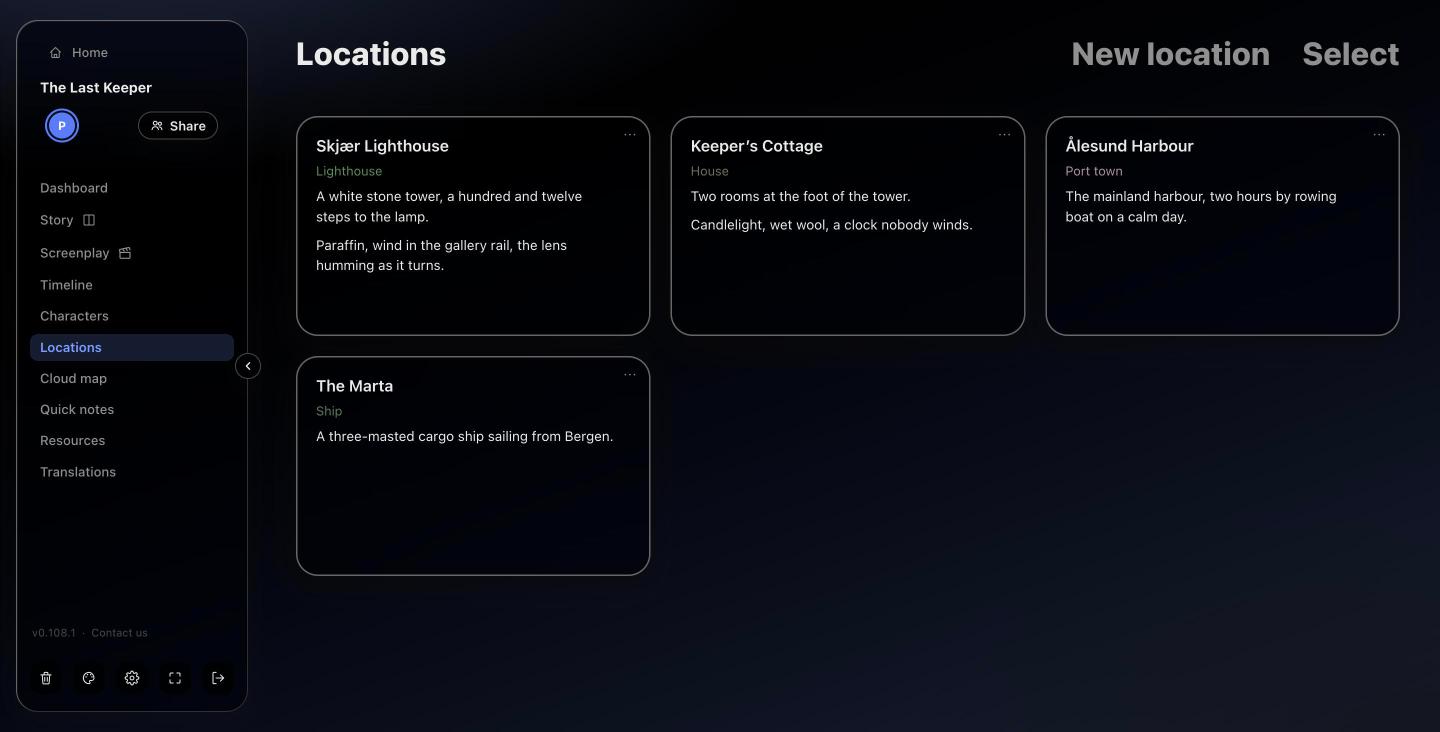
The Locations section gives every place its own sheet with the questions above: type (city, forest, ship…), description, atmosphere and mood, significance to the story, history, and notes.
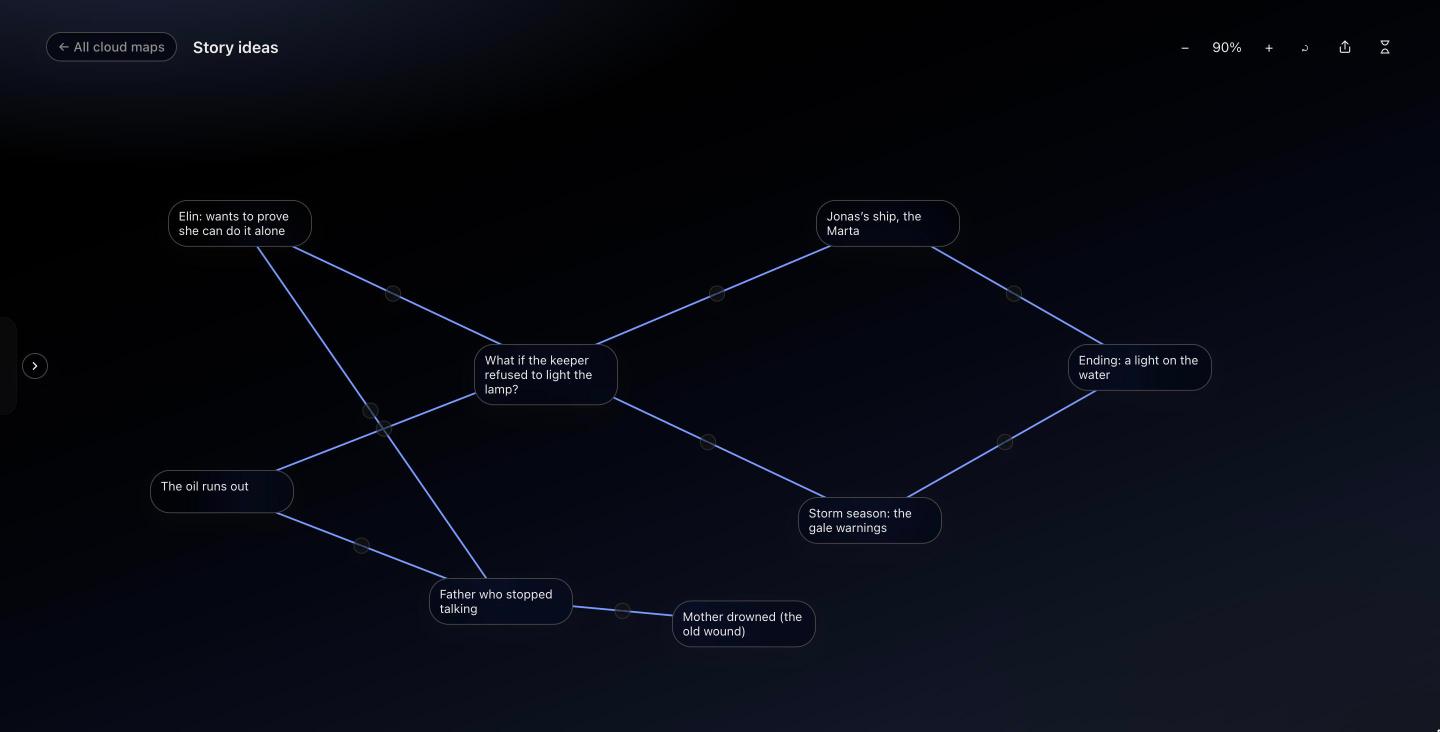
Link places to events on the timeline to see what happened where, and use a cloud map for the loose lore that hasn’t found a home yet: legends, factions, half-formed ideas.
Tip: when you add a new place, write one sentence about why it matters to the story. If you can’t, it can probably wait.